Tap the icon to learn more
Nighttime Efficacy Endpoints
Daytime Efficacy Endpoints
Other Endpoints
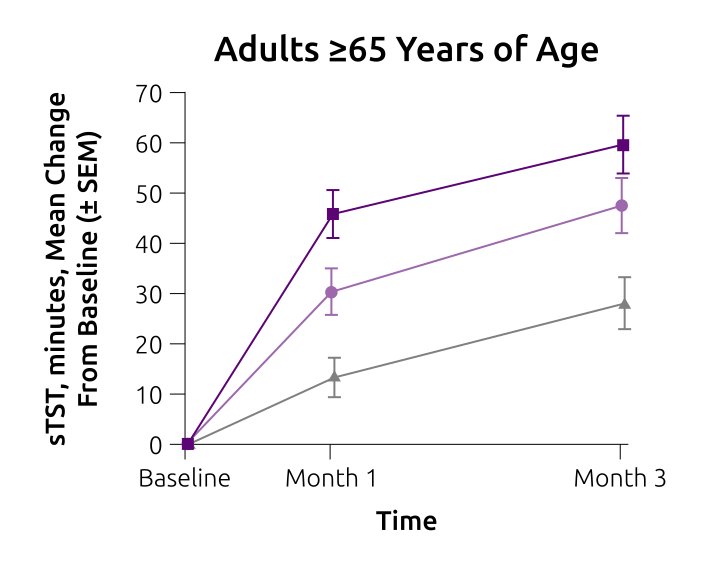
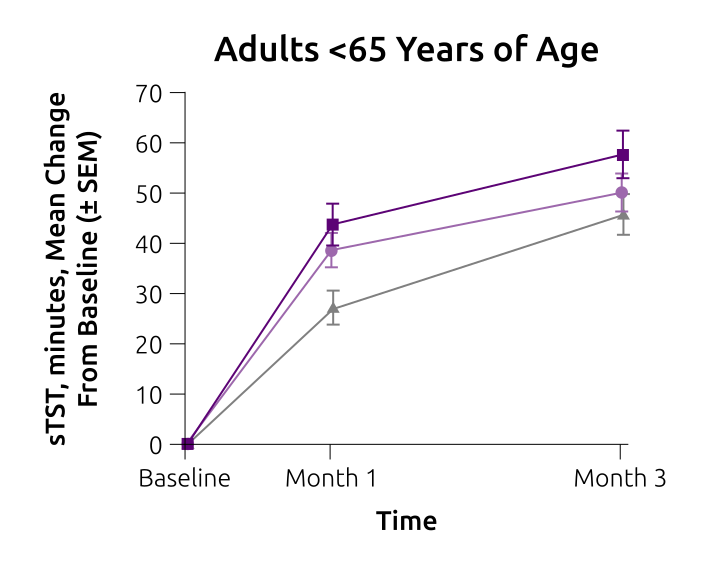
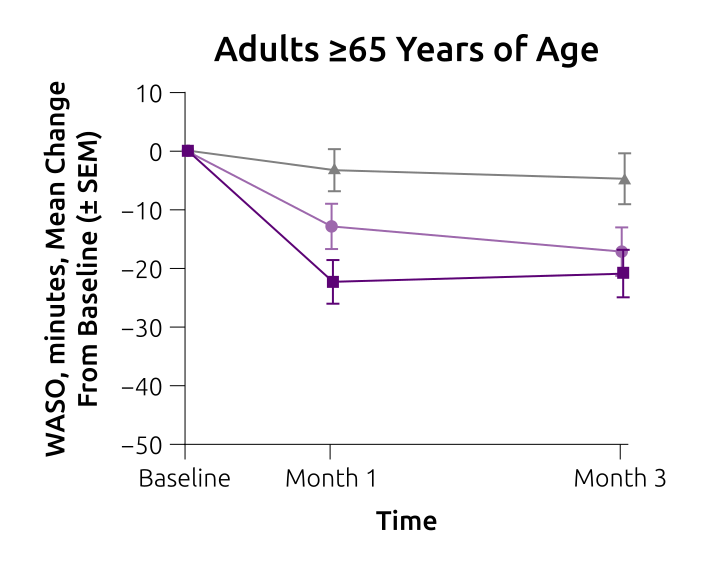
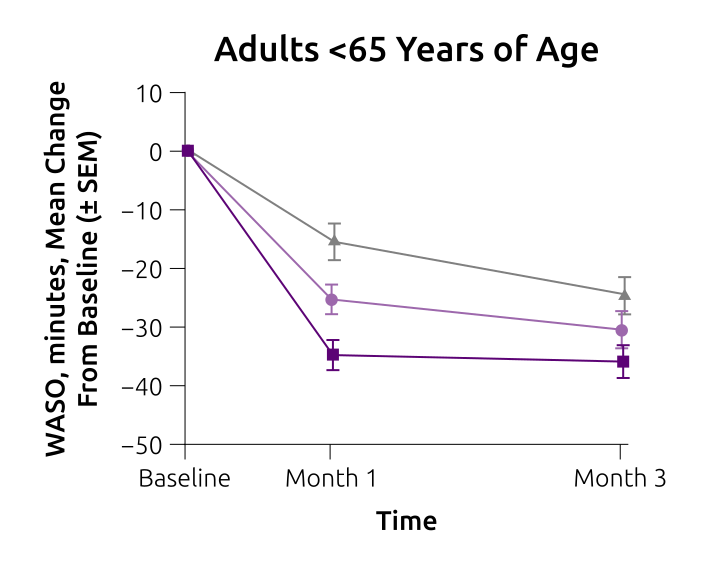
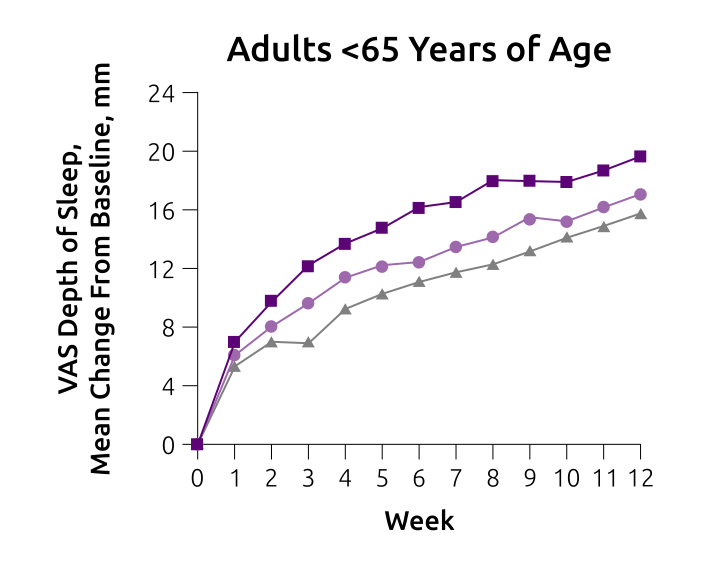
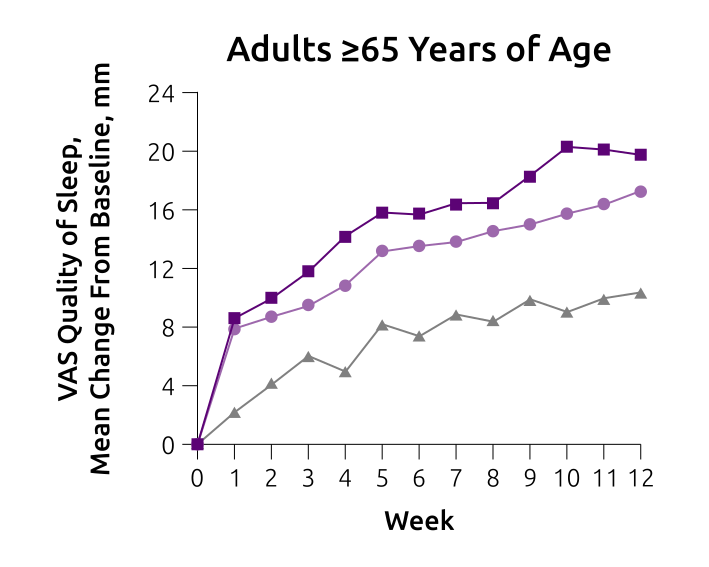
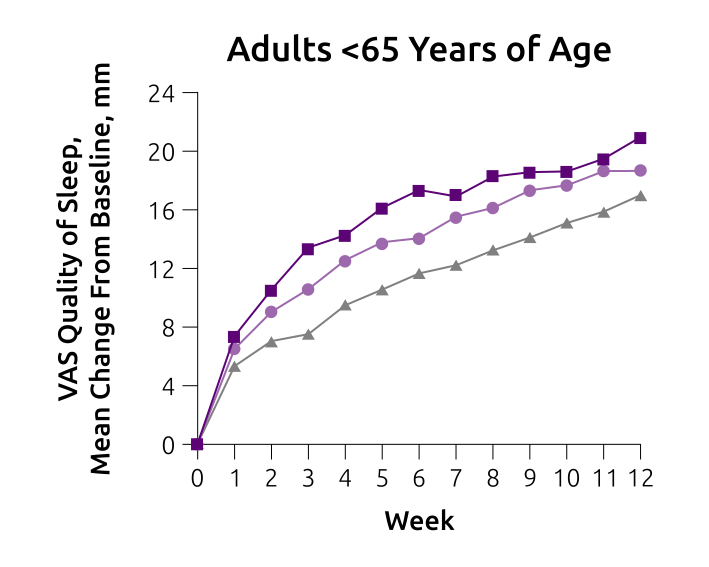
In older and younger adults with insomnia, daridorexant 50 mg and 25 mg improved nighttime symptoms in a dose-dependent manner
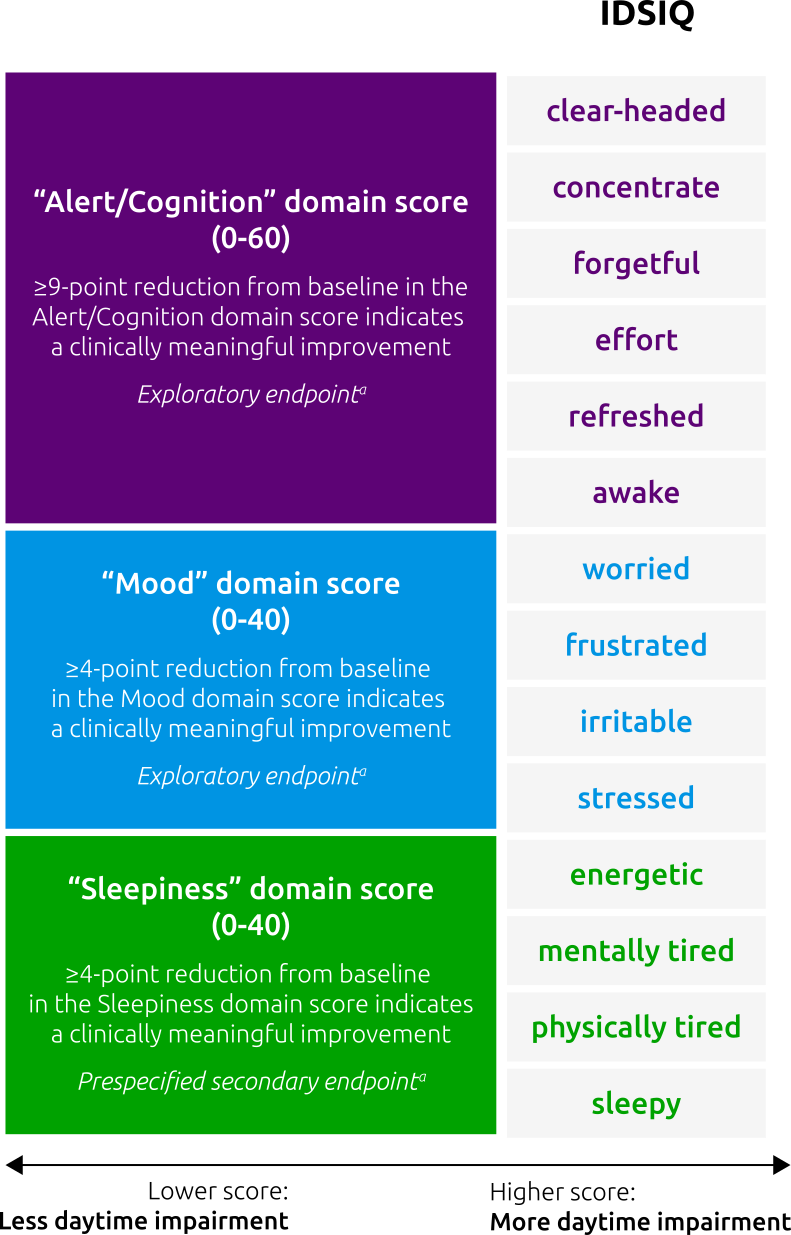
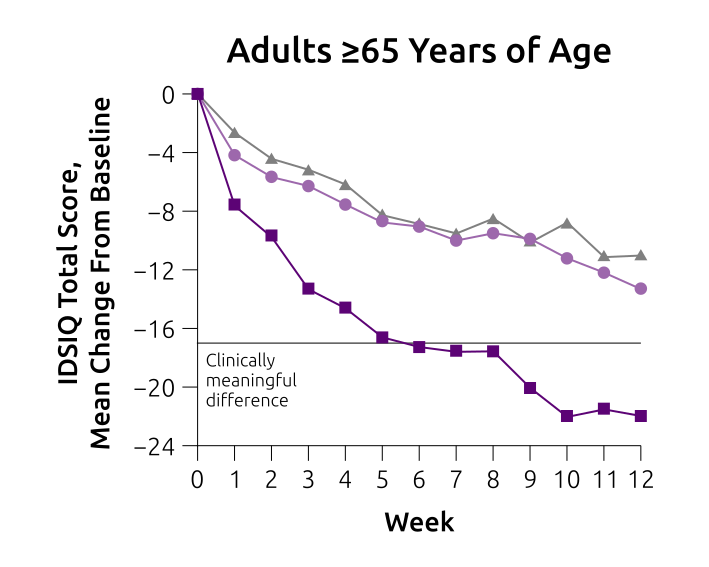
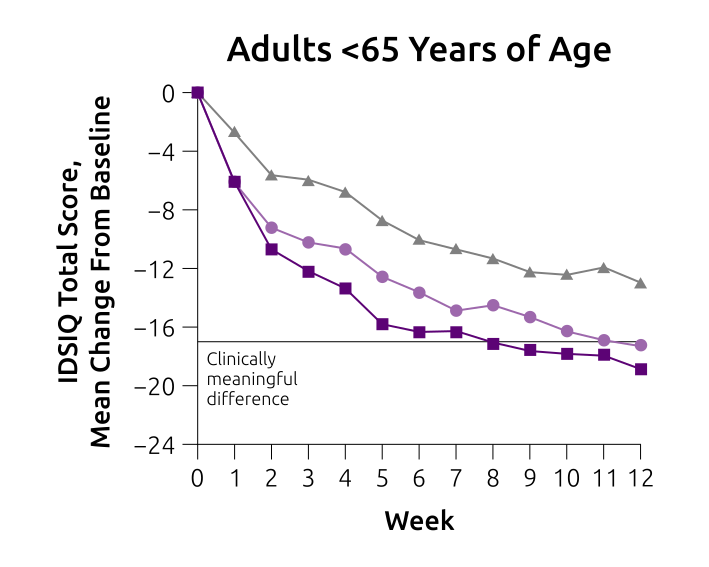
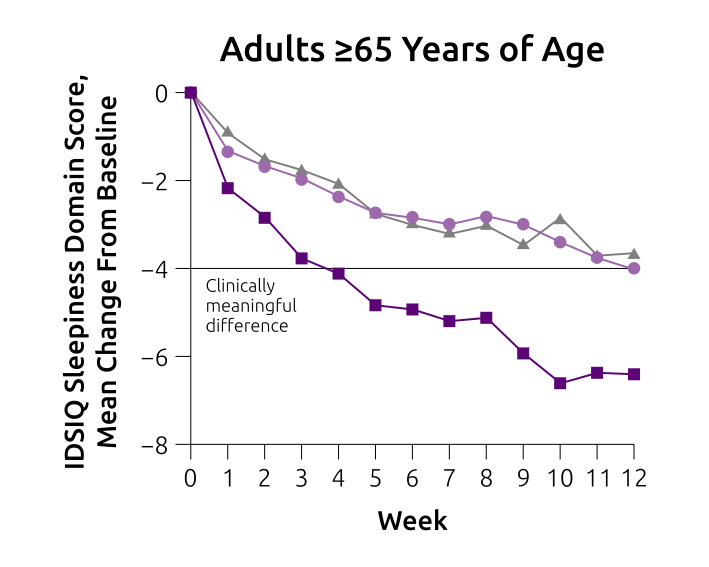
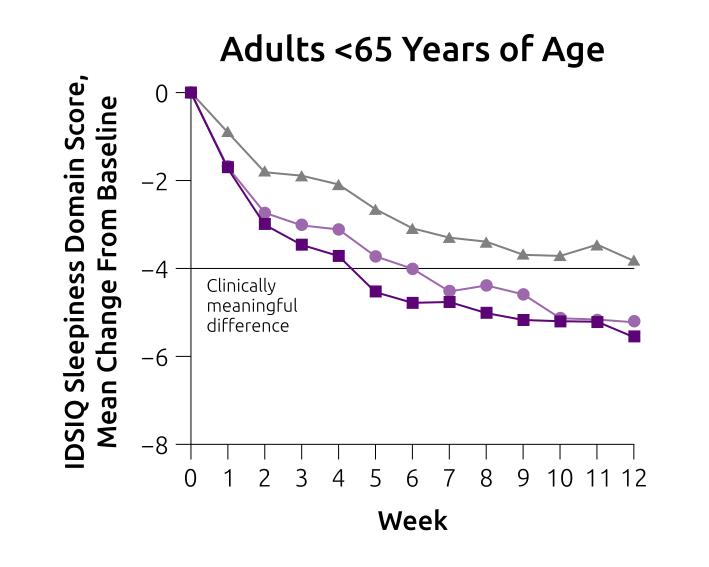
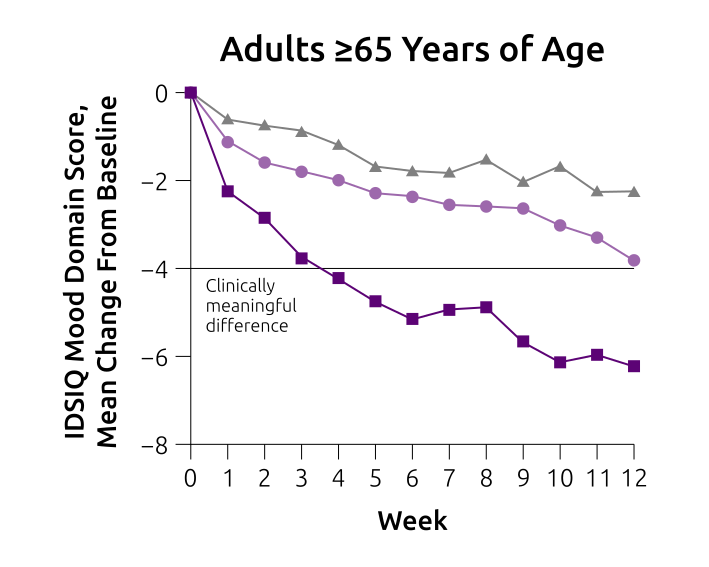
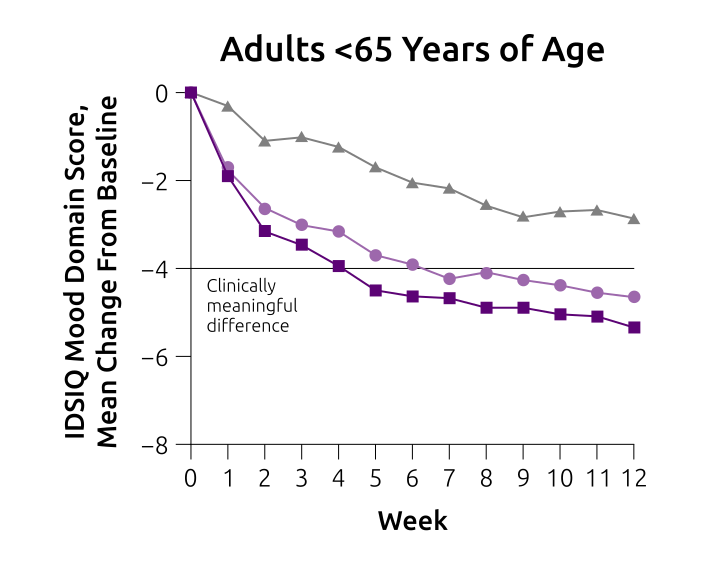
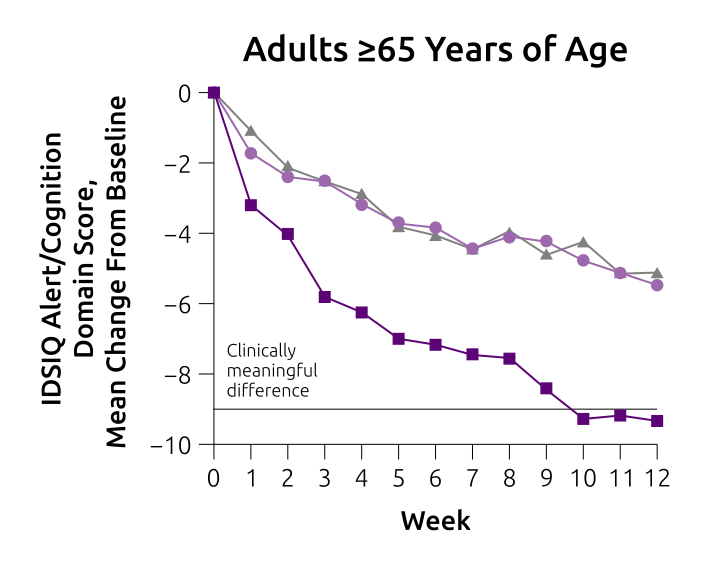
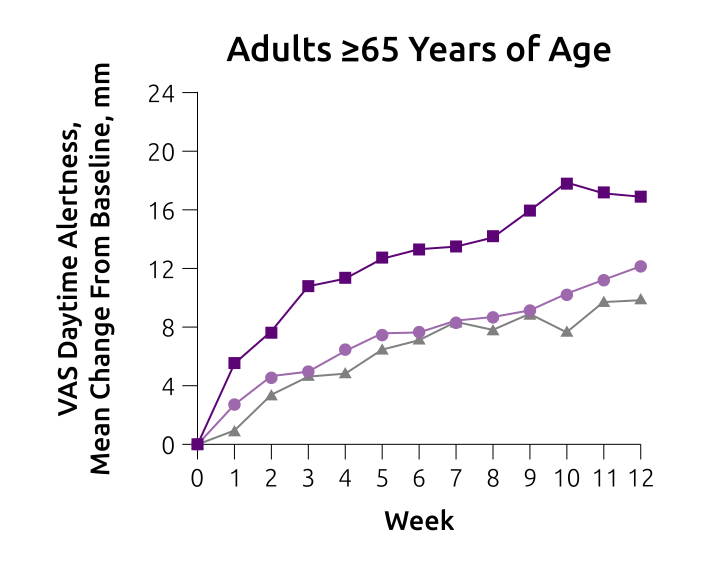
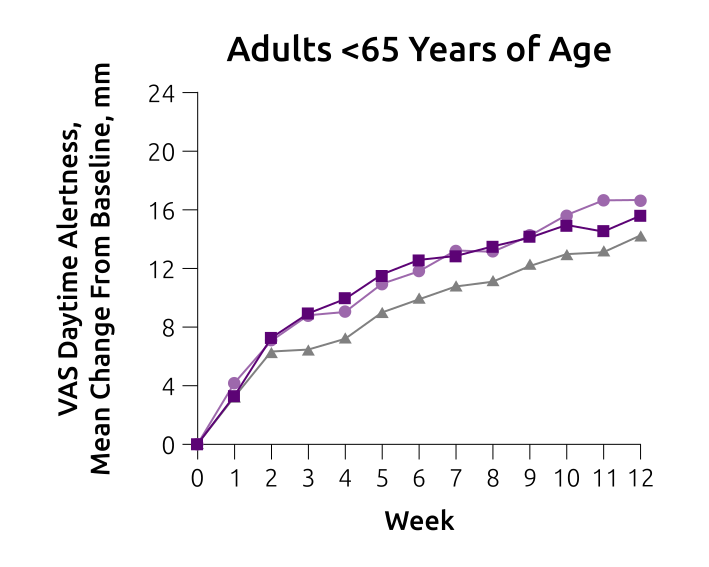
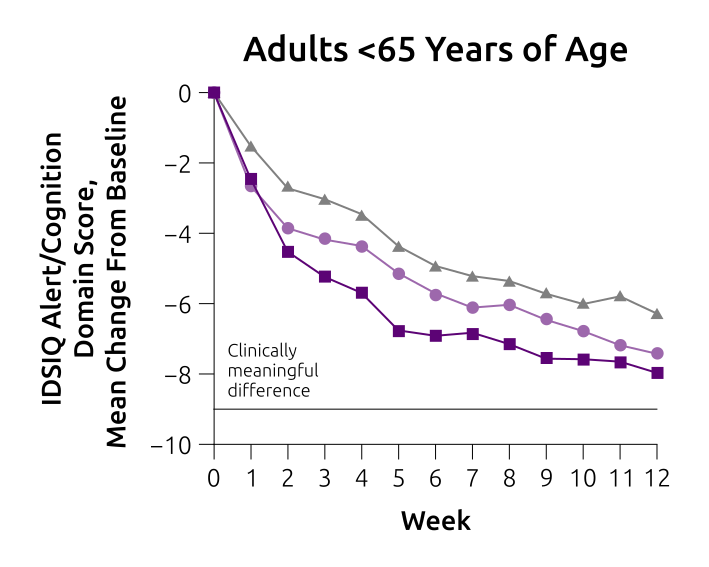
Use of daridorexant 50 mg showed clinically meaningful improvements in daytime symptoms based on the IDSIQ total and domain scores
No new safety concerns were identified, and the risk of next-morning residual effects was not increased in older adults treated with daridorexant
1. American Psychiatric Association. Diagnostic and Statistical Manual of Mental Disorders, 5th edition (DSM-5). Arlington, VA: American Psychiatric Association, 2013. 2. Bjorøy I et al. Front Psychol. 2020;11:527. 3. Pallesen S et al. Sleep Med. 2014;15(2):173-179. 4. Morin CM et al. Can J Psychiatry. 2011;56(9):540-548. 5. Ohayon MM. Sleep Med Rev. 2002;6(2):97-111. 6. Foley DJ et al. Sleep. 1999;22 (suppl 2):S366-S372. 7. Guilia KK, Kumar VM. Psychogeriatrics. 2018;18(3):155-165. 8. Klink ME et al. Arch Intern Med. 1992;152(8):1634-1637. 9. Patel D et al. J Clin Sleep Med. 2018;14(6):1017-1024. 10. Shi S, Klotz U. Curr Drug Metab. 2011;12(7):601-610. 11. QUVIVIQ [Package insert]. Idorsia Pharmaceuticals US Inc. October 2022. 12. Mignot E et al. Lancet Neurol. 2022;21(2):125-139; 13. Fietze I et al. Drugs Aging. 2022;39:795-810.
FDA, US Food and Drug Administration; IDSIQ, Insomnia Daytime Symptoms and Impacts Questionnaire; ISI, Insomnia Severity Index; LPS, latency to persistent sleep; sTST, self-reported total sleep time; VAS, visual analog scale; WASO, wake after sleep onset.
©2022 Idorsia Pharmaceuticals, Ltd.
MED-US-DA-2200287 12/22
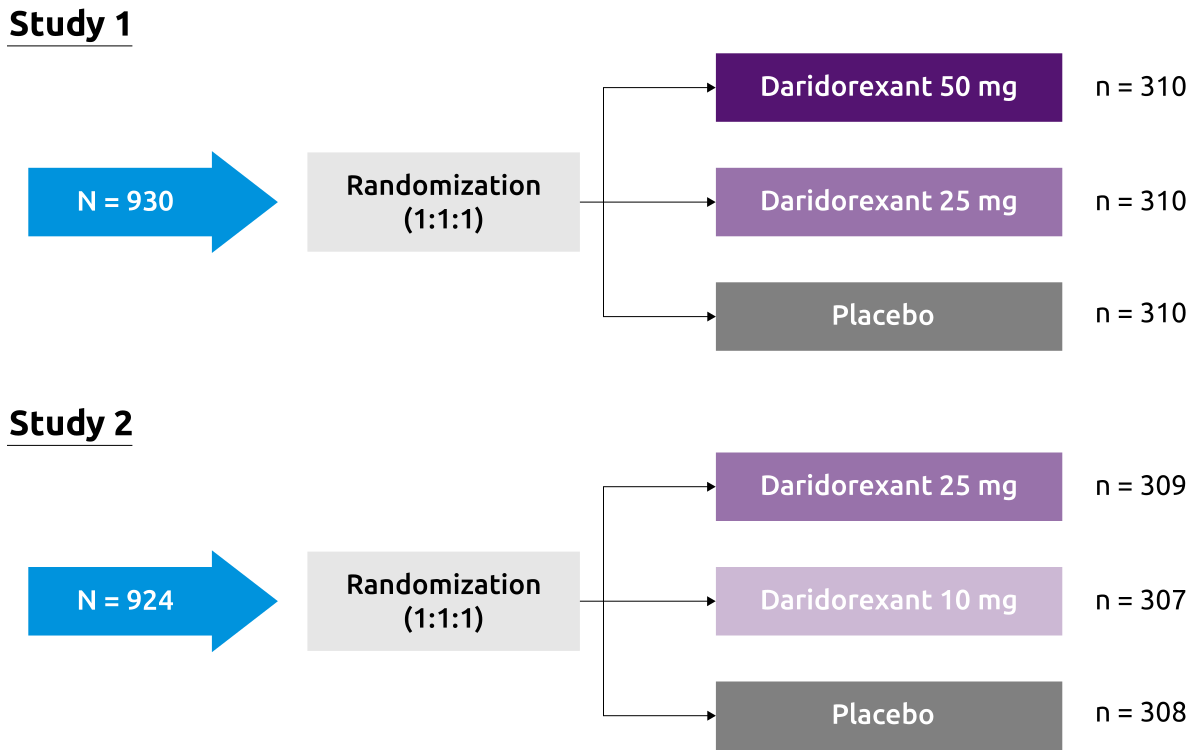
Study Design
Screening
20-31 days
Treatment Period
84 days
Safety Follow-up
30 days
Single-blind placebo run-in period
Daridorexant 50 mg and 25 mg vs placebo
Single-blind placebo run-out period (7 days)
Additional 23 days of observation
(or enrollment in an optional extension study for subset of patients
Inclusion and Exclusion Criteria
ISI, Insomnia Severity Index; LPS, latency to persistent sleep; PSG, polysomnography; TST, total sleep time; WASO, wake after sleep onset.
AASM, American Academy of Sleep Medicine; PSG, polysomnography.
Outcomes
In these secondary subgroup post hoc analyses, data were descriptive, not controlled for type 1 error rate, and not specifically powered for the analysis conducted in the study. Tests for interactions between the treatment groups and age were not conducted.
Latency to Persistent Sleep (LPS)
Measures the time between the start of the PSG recording and the first 10 consecutive minutes of sleep1
Wake After Sleep Onset (WASO)
Measures the total amount of time a person is awake between first falling asleep and the end of the PSG recording1
Self-Reported Total Sleep Time (sTST)
Total sleep time as estimated by the participant1
PSG, polysomnography.
1. Sateia MJ et al. J Clin Sleep Med. 2017;13:307-349.
In these secondary subgroup post hoc analyses, data were descriptive, not controlled for type 1 error rate, and not specifically powered for the analysis conducted in the study. Tests for interactions between the treatment groups and age were not conducted.
Insomnia Daytime Symptoms and Impacts Questionnaire (IDSIQ) Sleepiness Domain Score
Novel validated patient-report questionnaire completed daily to assess daytime impairment. Developed per FDA guidance to assess impact of insomnia and treatments1
Total IDSIQ Score
≥17-point reduction from baseline in the Total score indicates a clinically meaningful improvement
Example Question
How mentally tired did you feel today? Scale 0-10 with 0=not at all mentally tired and 10=very mentally tired
FDA, US Food and Drug Administration.
aEndpoints refer to Study 1.
1. Hudgens S et al. Patient. 2021;14:249-268.
In these secondary subgroup post hoc analyses, data were descriptive, not controlled for type 1 error rate, and not specifically powered for the analysis conducted in the study. Tests for interactions between the treatment groups and age were not conducted.
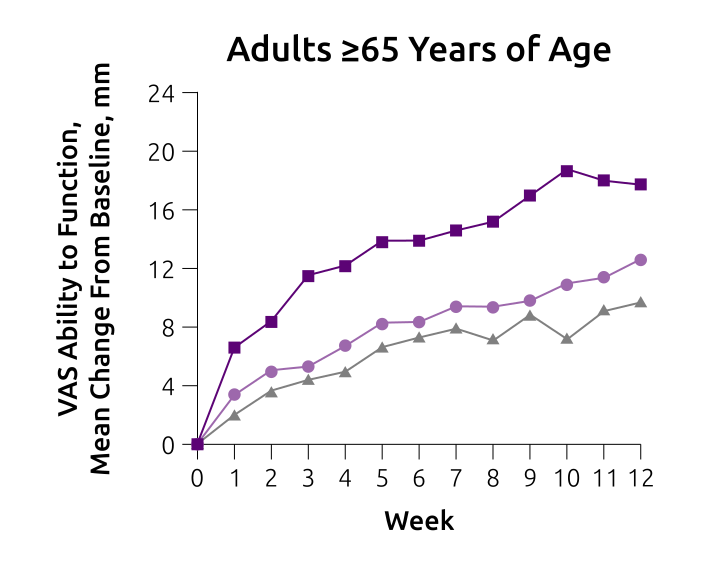
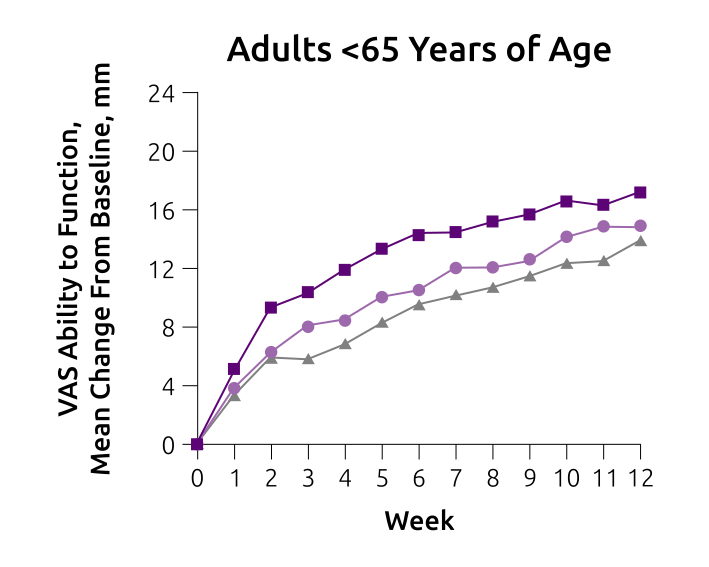
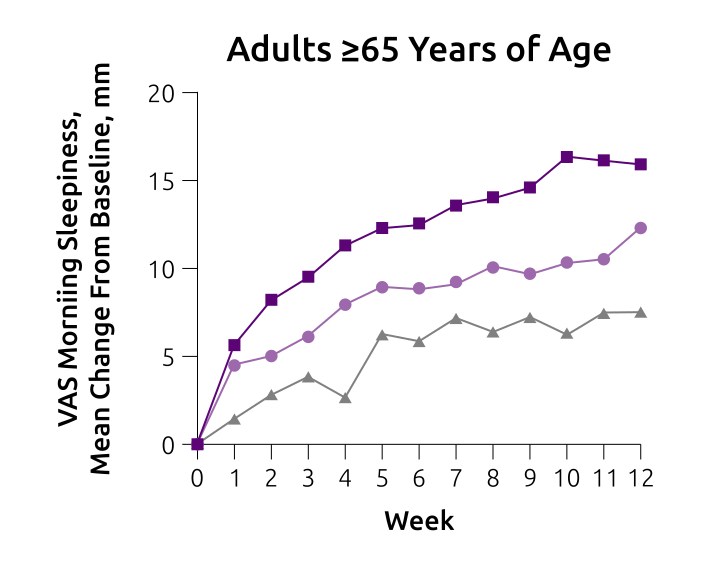
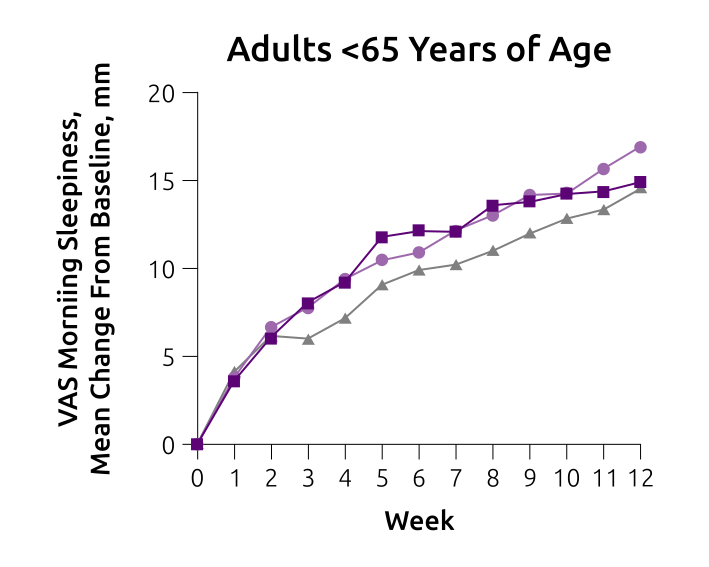
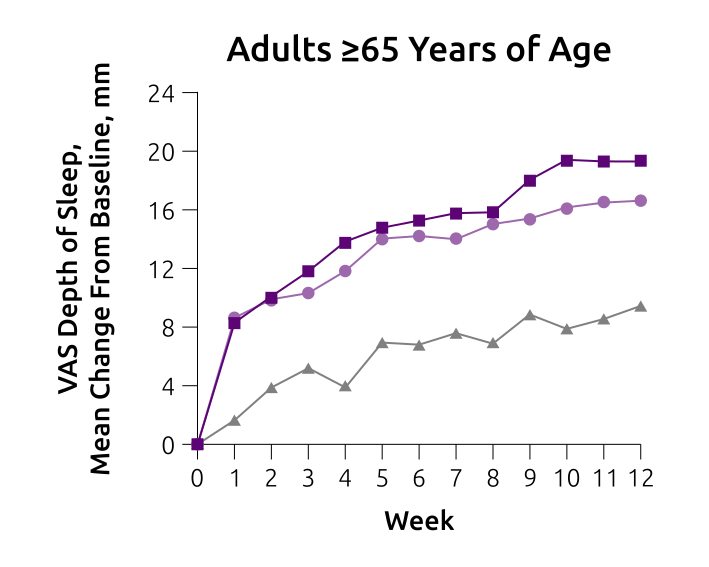
Visual Analog Scale (VAS) for Sleep and Daytime Measures
In the morning, the VAS is used to measure depth of sleep (0-100) and quality of sleep (0-100). In the evening, the VAS is used to measure the ability to function (0-100) and daytime alertness (0-100)
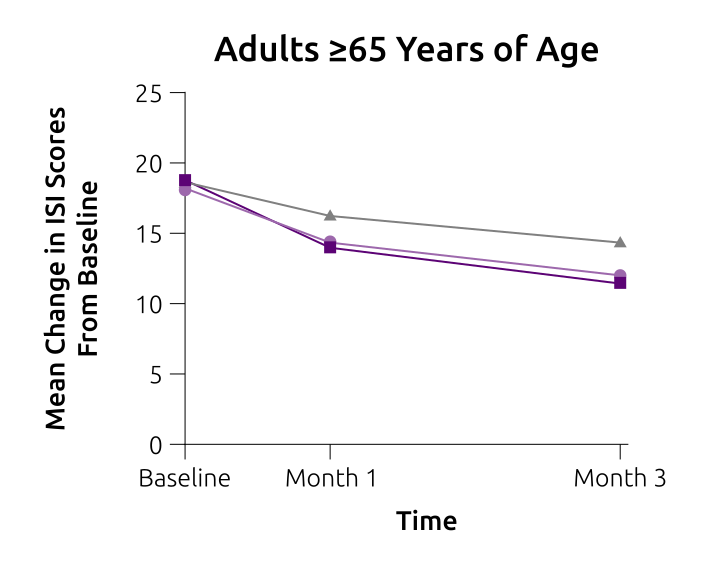
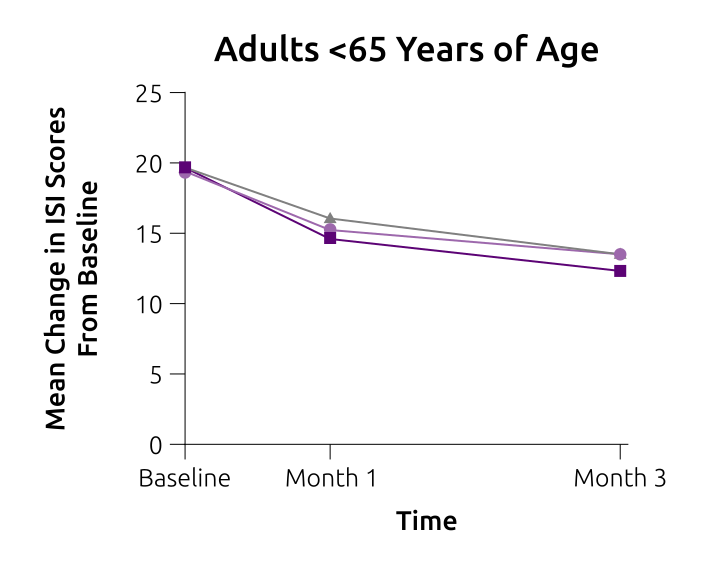
Insomnia Severity Index (ISI)
The ISI is used to measure the severity of sleep disturbance by a 7-item scale1
ISI (0-28):
absence of insomnia (0–7);
sub-threshold insomnia (8–14);
moderate insomnia (15–21);
and severe insomnia (22–28)
A change of 10 in ISI score indicates a clinically meaningful difference
For additional details on study 1 design, please refer to
1. Morin CM et al. Sleep. 2011;34(5):601-608.
Subject Disposition
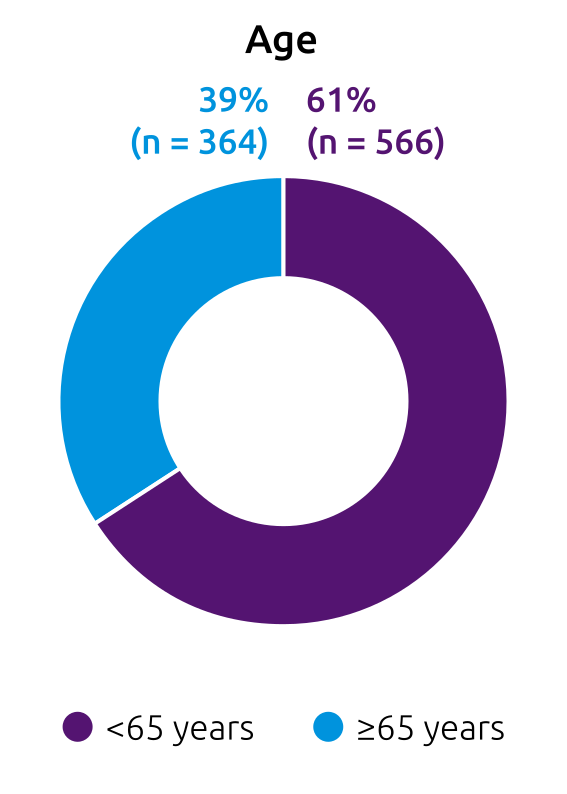
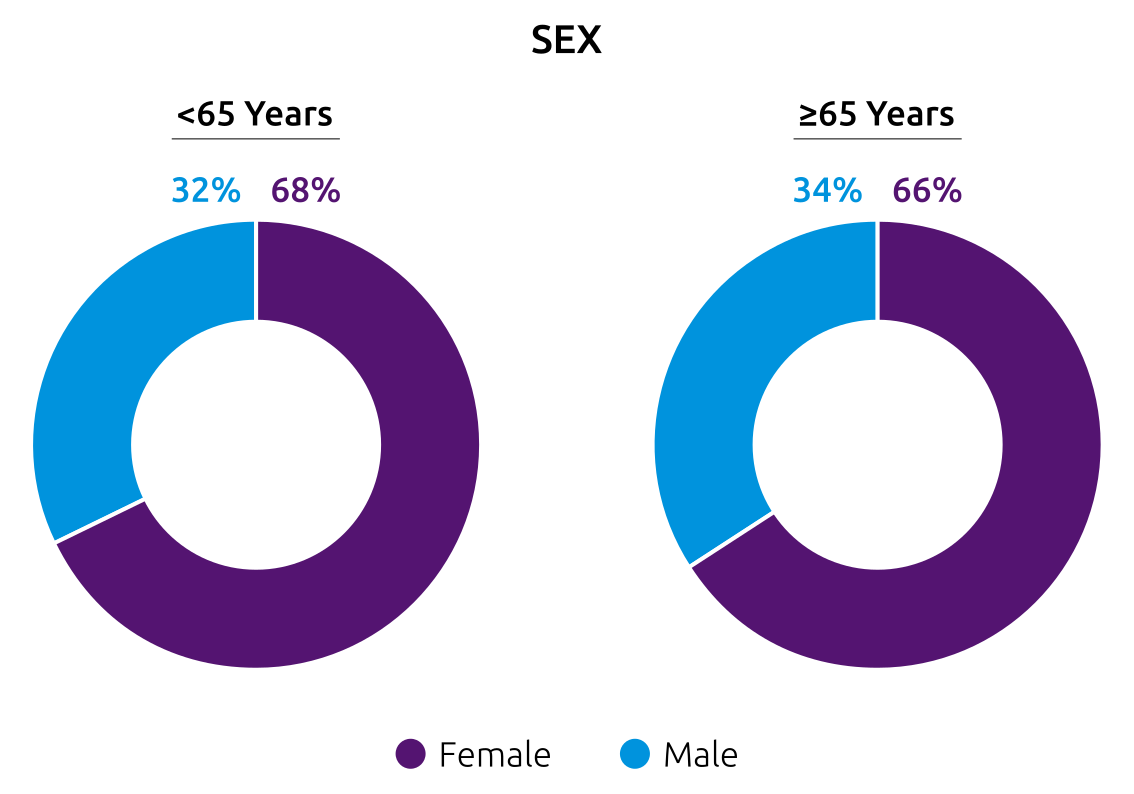
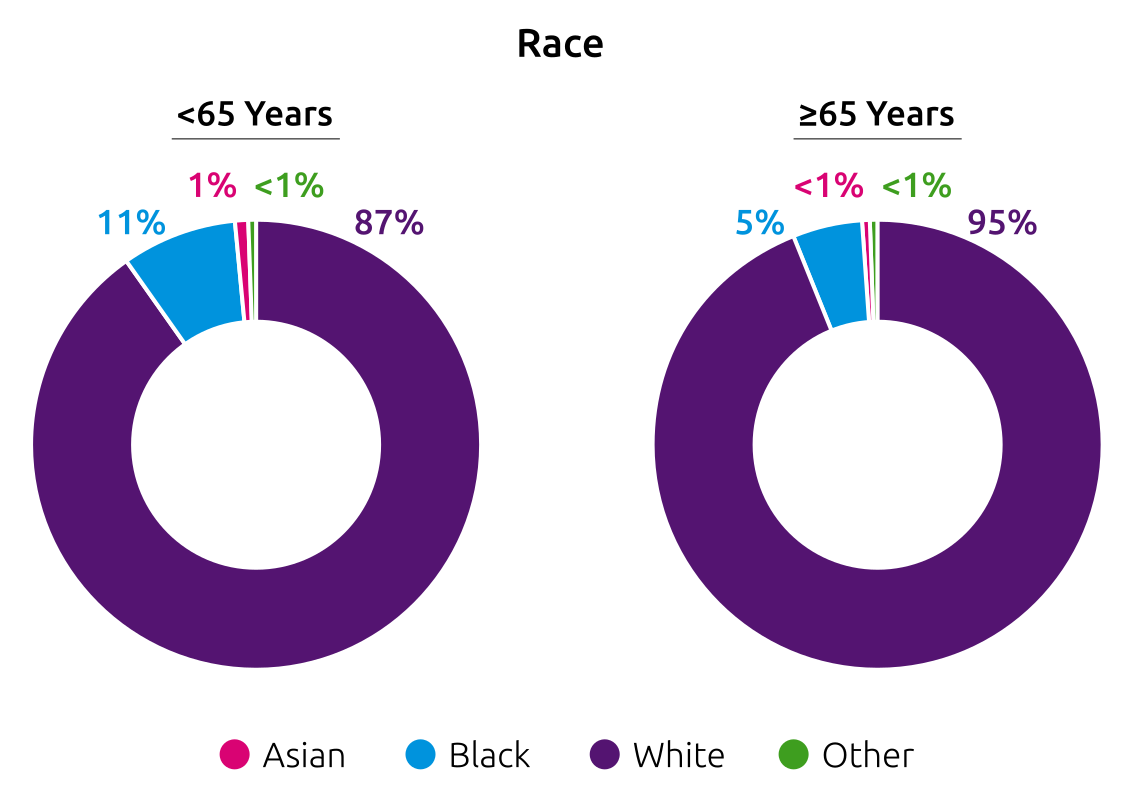
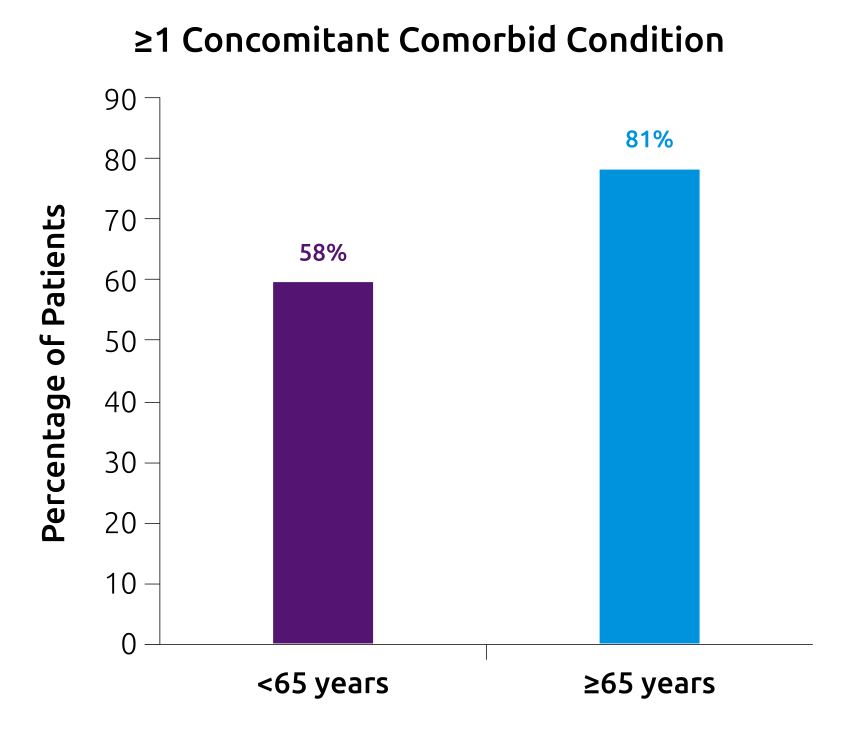
Participant Demographics and Characteristics
Adapted from Fietze, I, et al. Drugs Aging. 2022;39:795-810. This article is licensed under a Creative Commons Attribution NonCommercial 4.0 International License: http://creativecommons.org/licenses/by-nc/4.0/.
| Characteristics | <65 Years n = 566 | ≥65 Years n = 364 |
|---|---|---|
WASO, mean (SD), minutes | 91.6 (38.1) | 109.5 (38.5) |
LPS, mean (SD), minutes | 67.5 (38.9) | 63.3 (38.0) |
TST, mean (SD), minutes | 328.0 (54.2) | 315.4 (51.2) |
sTST, mean (SD), minutes | 314.3 (55.2) | 310.9 (59.8) |
Time since insomnia diagnosis, mean (SD), years | 8.9 (8.8) | 13.3 (12.0) |
ISI score,a mean (SD) | 19.5 (4.2) | 18.5 (3.9) |
ISI, Insomnia Severity Index; LPS, latency to persistent sleep; SD, standard deviation; sTST, self-reported total sleep time; TST, total sleep time; WASO, wake after sleep onset.
aISI score 0-7 = absence of insomnia; 8-14 = sub-threshold insomnia; 15-21 = moderate insomnia; and 22-28 = severe insomnia.1
1. Morin CM et al. Sleep. 2011;34(5):601-608.
Adapted from Fietze, I, et al. Drugs Aging. 2022;39:795-810. This article is licensed under a Creative Commons Attribution NonCommercial 4.0 International License: http://creativecommons.org/licenses/by-nc/4.0/.
IDSIQ scores,a mean (SD) | <65 Years n = 566 | ≥65 Years n = 364 |
|---|---|---|
IDSIQ Sleepiness domain score (range: 0-40) | 22.9 (6.9) | 21.3 (7.0) |
IDSIQ Mood domain score (range: 0-40) | 20.1 (8.7) | 18.2 (8.5) |
IDSIQ Alert/Cognition domain score (range: 0-60) | 33.1 (10.1) | 30.4 (10.4) |
IDSIQ Total score (range: 0-140) | 76.2 (24.4) | 69.9 (24.8) |
IDSIQ, Insomnia Daytime Symptoms and Impacts Questionnaire; SD, standard deviation.
aLower IDSIQ scores indicate better patient-perceived daytime functioning.
Adapted from Fietze, I, et al. Drugs Aging. 2022;39:795-810. This article is licensed under a Creative Commons Attribution NonCommercial 4.0 International License: http://creativecommons.org/licenses/by-nc/4.0/.
VAS scores,a mean (SD) | <65 Years n = 566 | ≥65 Years n = 364 |
|---|---|---|
VAS quality of sleep (range: 0-100) | 34.0 (17.4) | 38.6 (17.4) |
VAS depth of sleep (range: 0-100) | 34.3 (17.4) | 38.8 (17.8) |
VAS daytime alertness (range: 0-100) | 37.5 (19.8) | 43.4 (20.0) |
VAS ability to function (range: 0-100) | 38.1 (19.3) | 43.3 (19.5) |
VAS morning sleepiness (range: 0-100) | 35.1 (18.3) | 41.4 (19.1) |
SD, standard deviation; VAS, visual analog scale.
aHigher VAS scores indicate better scores.
Adapted from Fietze, I, et al. Drugs Aging. 2022;39:795-810. This article is licensed under a Creative Commons Attribution NonCommercial 4.0 International License: http://creativecommons.org/licenses/by-nc/4.0/.
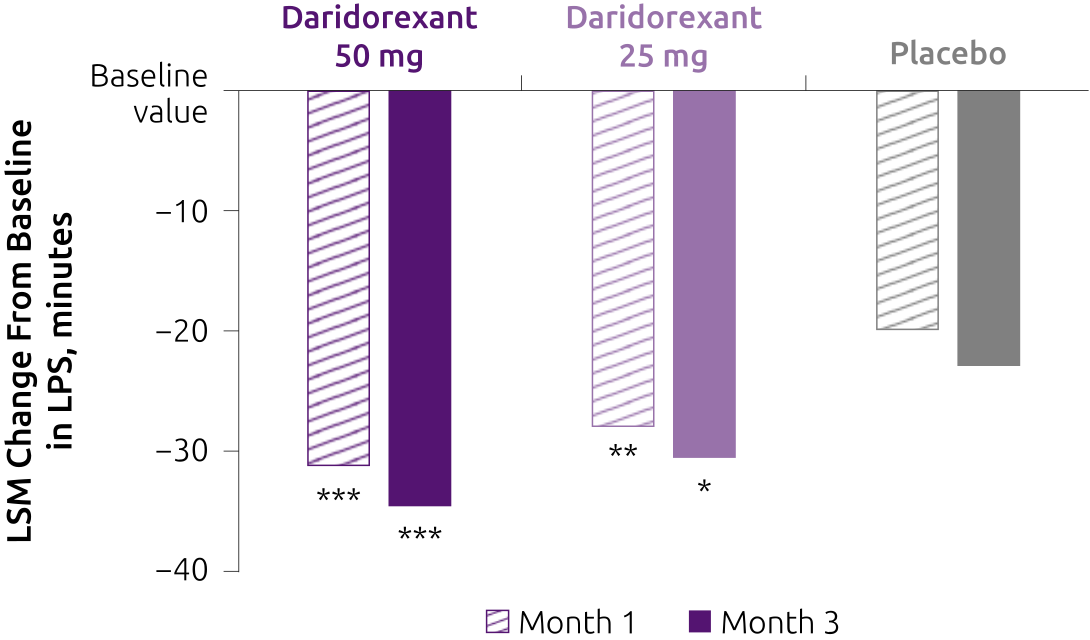
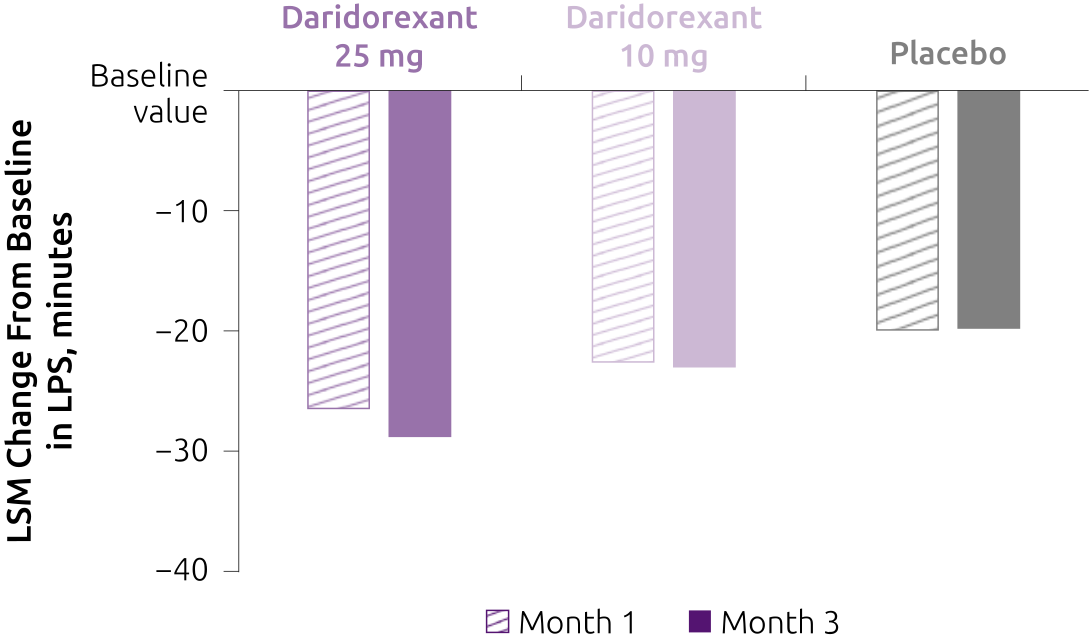
RESULTS: Primary Endpoint - (objective) Sleep Induction (LPS)
*P = 0.0015; **P = 0.0005; ***P < 0.0001 versus placebo.
LPS, latency to persistent sleep; LSM, least squares mean.
*LPS did not reach statistical significance after controlling for multiple comparisons.
LPS, latency to persistent sleep; LSM, least squares mean.
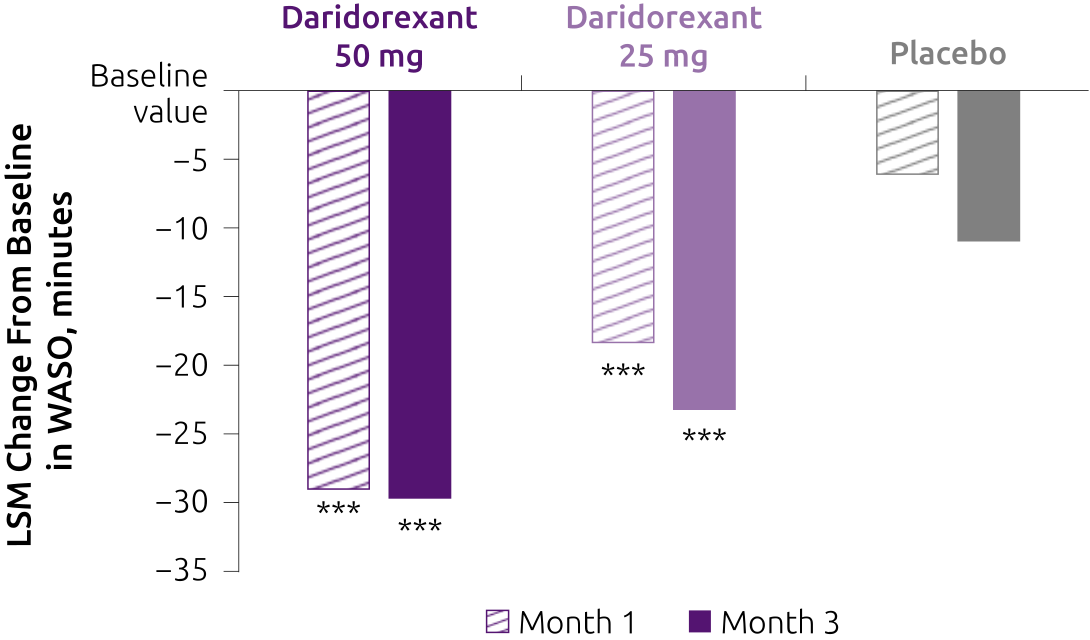
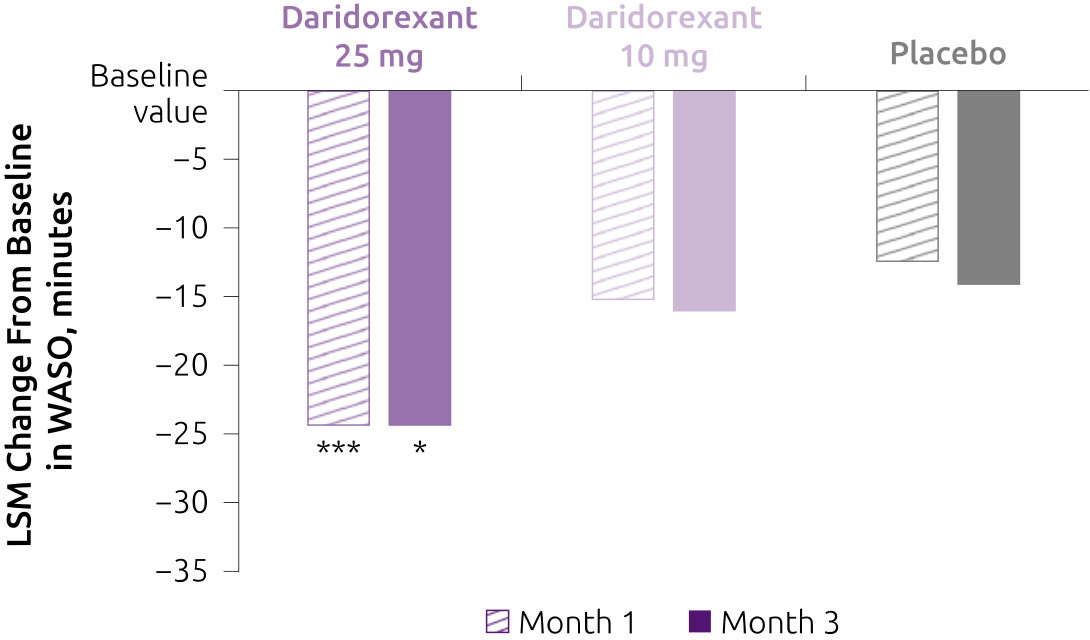
RESULTS: Primary Endpoint - (objective) Sleep Maintenance (WASO)
***P < 0.0001 versus placebo.
LSM, least squares mean; WASO, wake after sleep onset.
**P = 0.0028; ***P = 0.0001 versus placebo.
LSM, least squares mean; WASO, wake after sleep onset.
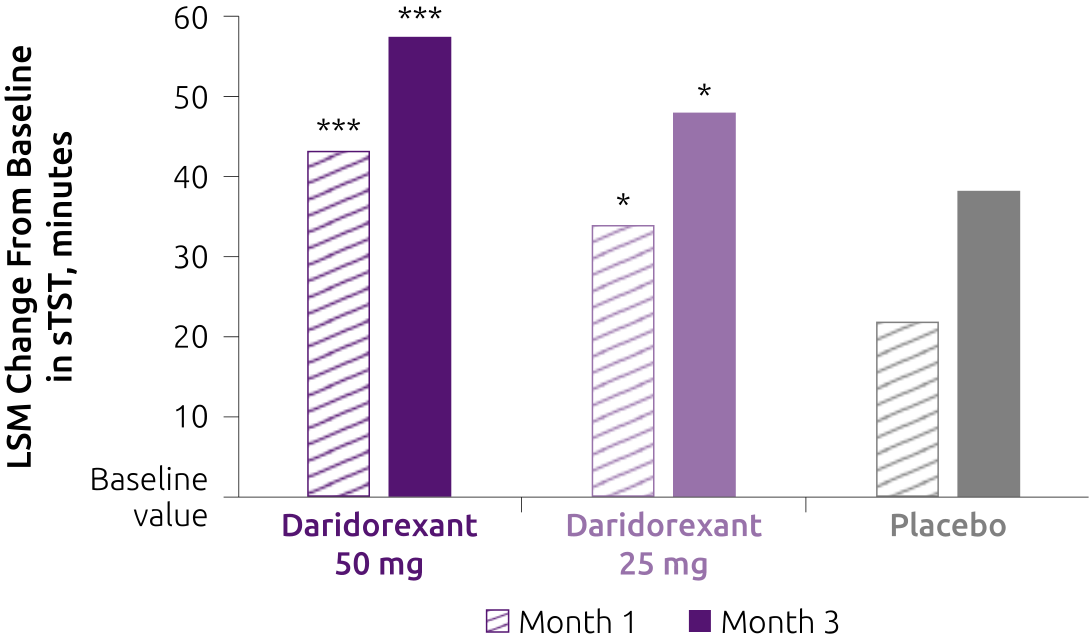
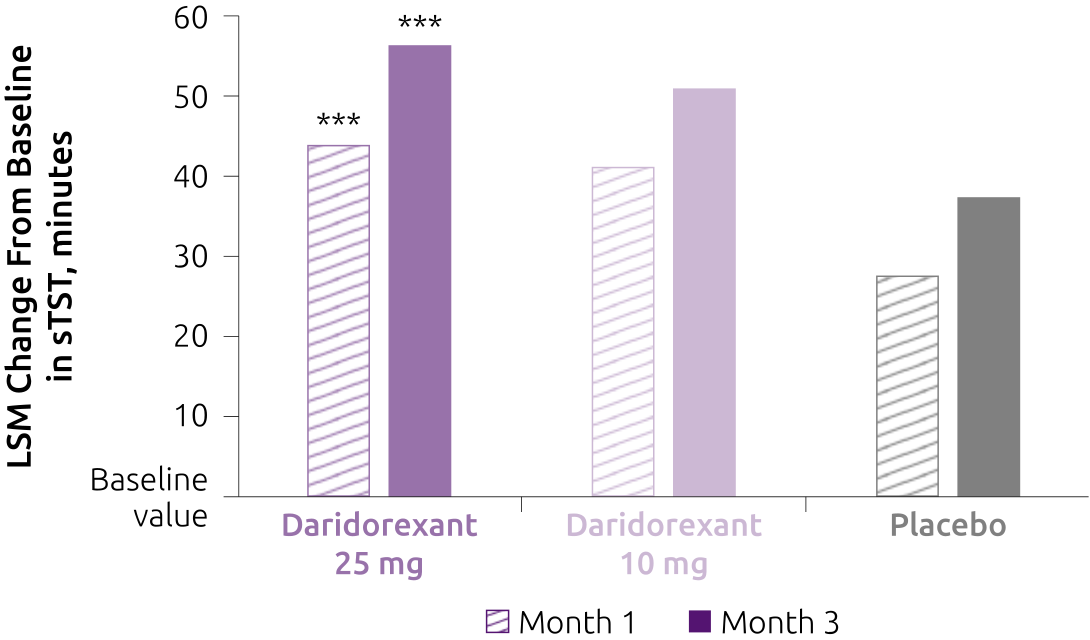
RESULTS: Secondary Endpoint - (subjective) Total Sleep Time (sTST)
*P = 0.033; **P = 0.0013; ***P < 0.0001 versus placebo.
LSM, least squares mean; sTST, self-reported total sleep time.
***P < 0.0001 versus placebo.
LSM, least squares mean; sTST, self-reported total sleep time.
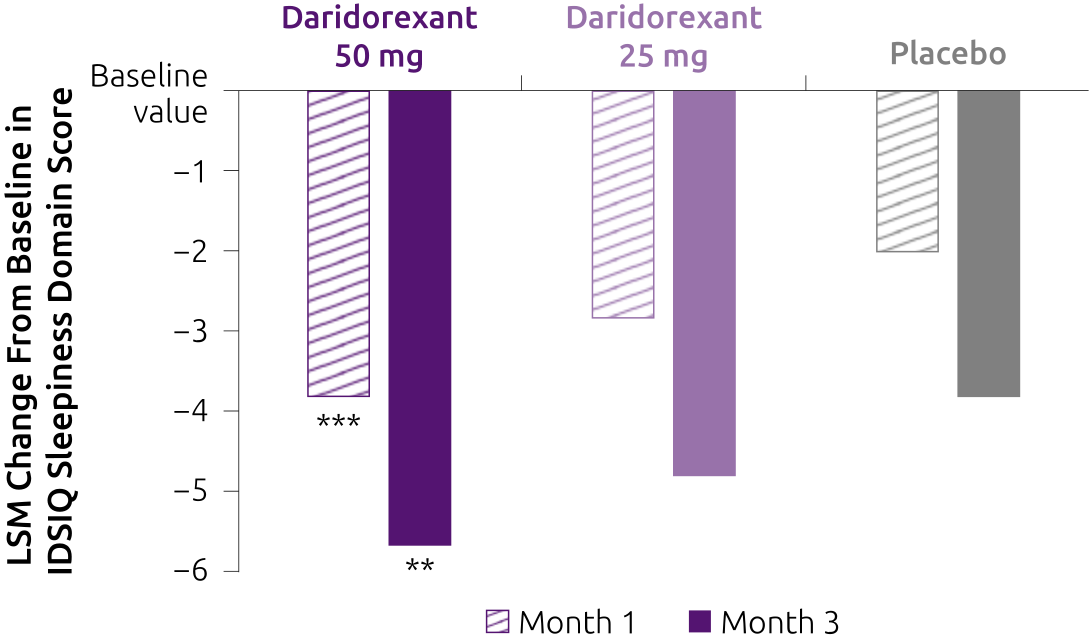
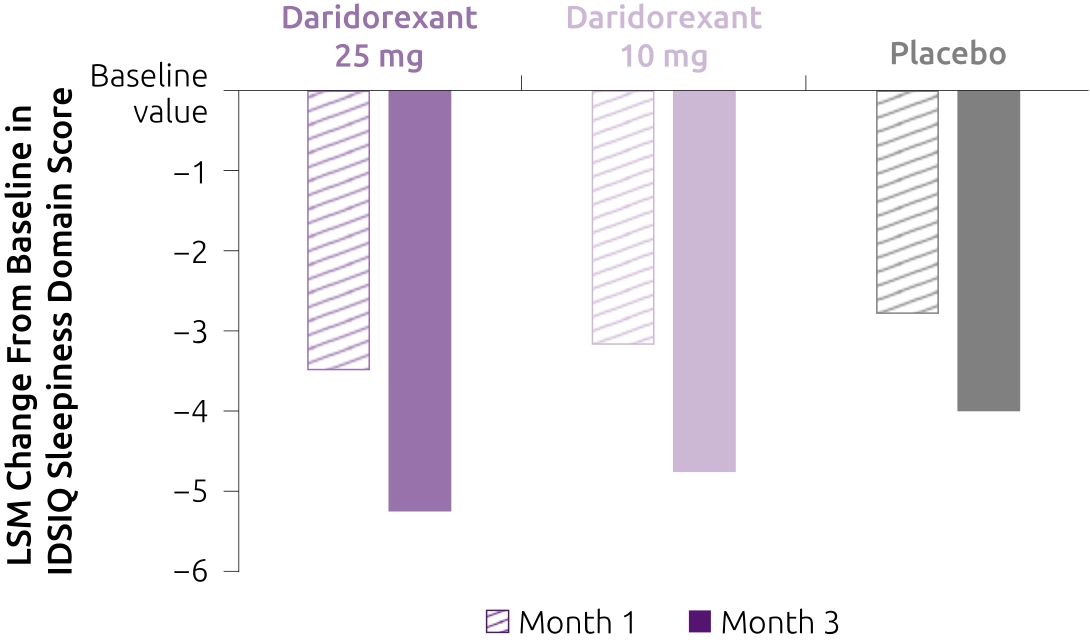
RESULTS: Secondary Endpoint - (subjective)
IDSIQ Sleepiness domain score
**P = 0.0002; ***P < 0.0001 versus placebo.
IDSIQ, Insomnia Daytime Symptoms and Impacts Questionnaire; LSM, least squares mean.
1. Hudgens S, et al. Patient. 2021;14:249-268.
*The IDSIQ Sleepiness domain score did not reach statistical significance after controlling for multiple comparisons.
IDSIQ, Insomnia Daytime Symptoms and Impacts Questionnaire; LSM, least squares mean.
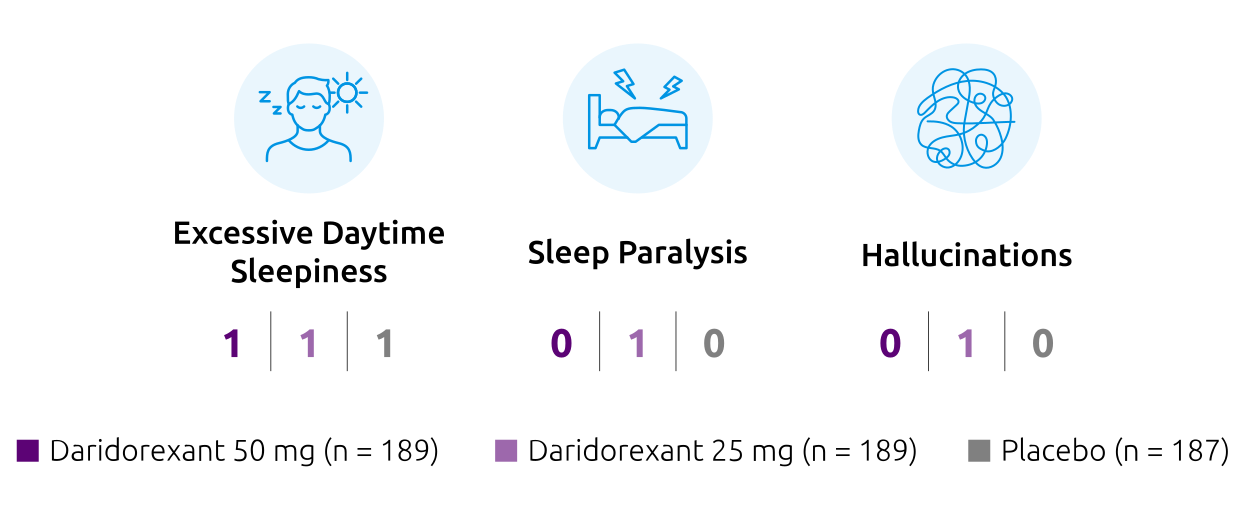
Safety and Tolerability
aPatient had a history of multiple cerebrovascular and cardiovascular conditions, including stroke and hypertension, and the event was assessed by the investigator as not related to treatment.
| Adverse Events n (%) | |||
| Adverse Events n (%) | Daridorexant 50 mg n = 189 | Daridorexant 25 mg n = 189 | Placebo n = 187 |
|---|---|---|---|
| Patients who experienced ≥1 TEAE | |||
| Patients who experienced ≥1 TEAE | 74 (39) | 78 (41) | 67 (36) |
| Patients who experienced ≥1 serious TEAE | |||
| Patients who experienced ≥1 serious TEAE | 3 (2) | 1 (<1) | 4 (2) |
| TEAEs leading to treatment discontinuation | |||
| TEAEs leading to treatment discontinuation | 2 (1) | 6 (3) | 4 (2) |
| Patients who experienced a TEAEa (≥2% in any group) | |||
| Patients who experienced a TEAEa (≥2% in any group) | |||
| Nasopharyngitis | |||
| Nasopharyngitis | 13 (6.9) | 19 (10.1) | 16 (8.6) |
| Headache | |||
| Headache | 13 (6.9) | 11 (5.8) | 7 (3.7) |
| Nausea | |||
| Nausea | 3 (1.6) | 1 (0.5) | 2 (1.1) |
| Fatigue | |||
| Fatigue | 4 (2.1) | 3 (1.6) | 1 (0.5) |
| Accidental overdose | |||
| Accidental overdose | 5 (2.6) | 3 (1.6) | 5 (2.7) |
| Dizziness | |||
| Dizziness | 6 (3.2) | 2 (1.1) | 1 (0.5) |
| Back pain | |||
| Back pain | 5 (2.6) | 0 | 3 (1.6) |
| Somnolence | |||
| Somnolence | 4 (2.1) | 5 (2.6) | 5 (2.7) |
| Diarrhea | |||
| Diarrhea | 1 (0.5) | 6 (3.2) | 3 (1.6) |
| Fall | |||
| Fall | 0 | 0 | 4 (2.1) |
| Influenza | |||
| Influenza | 4 (2.1) | 3 (1.6) | 3 (1.6) |
| Upper abdominal pain | |||
| Upper abdominal pain | 0 | 0 | 0 |
TEAE, treatment-emergent adverse event.
aTEAEs that occurred during the double-blind treatment period presented with their preferred term; TEAEs are sorted by descending frequency in the daridorexant 50-mg group in adults aged ≥65 years, followed by age <65 years listed in order.
Adapted from Fietze, I, et al. Drugs Aging. 2022;39:795-810. This article is licensed under a Creative Commons Attribution NonCommercial 4.0 International License: http://creativecommons.org/licenses/by-nc/4.0/.
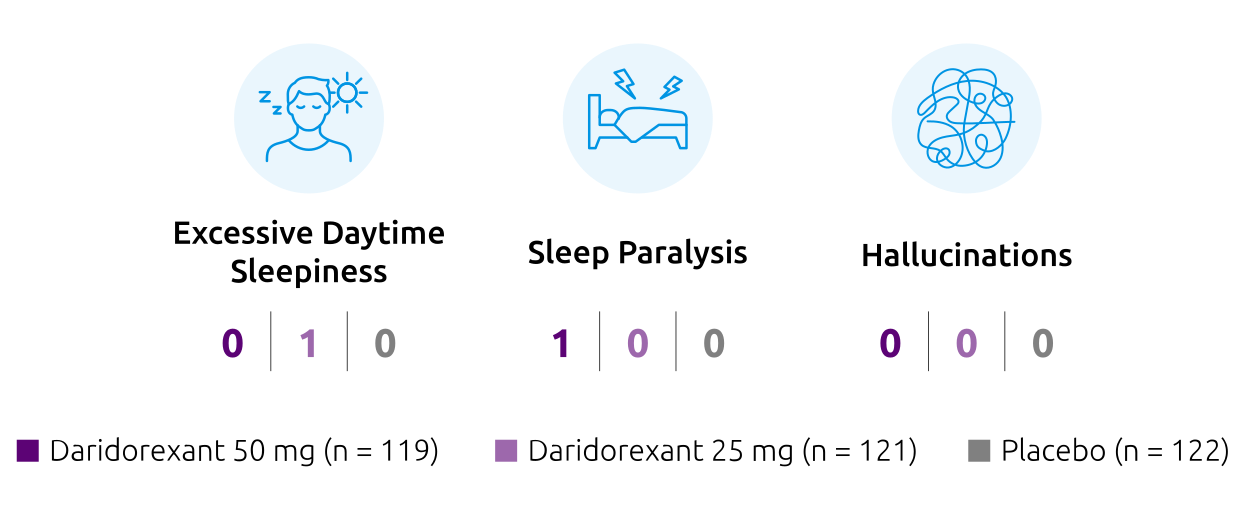
| Adverse Events n (%) | |||
| Adverse Events n (%) | Daridorexant 50 mg n = 119 | Daridorexant 25 mg n = 121 | Placebo n = 122 |
|---|---|---|---|
| Patients who experienced ≥1 TEAE | |||
| Patients who experienced ≥1 TEAE | 42 (35) | 39 (32) | 38 (31) |
| Patients who experienced ≥1 serious TEAE | |||
| Patients who experienced ≥1 serious TEAE | 0 | 1 (1) | 3 (3) |
| TEAEs leading to treatment discontinuation | |||
| TEAEs leading to treatment discontinuation | 1 (1) | 1 (1) | 6 (5) |
| Patients who experienced a TEAEa (≥2% in any group) | |||
| Patients who experienced a TEAEa (≥2% in any group) | |||
| Nasopharyngitis | |||
| Nasopharyngitis | 7 (5.9) | 2 (1.7) | 4 (3.3) |
| Headache | |||
| Headache | 6 (5.0) | 5 (4.1) | 5 (4.1) |
| Nausea | |||
| Nausea | 4 (3.4) | 0 | 1 (0.8) |
| Fatigue | |||
| Fatigue | 3 (2.5) | 4 (3.3) | 1 (0.8) |
| Accidental overdose | |||
| Accidental overdose | 3 (2.5) | 1 (0.8) | 0 |
| Dizziness | |||
| Dizziness | 1 (0.8) | 4 (3.3) | 1 (0.8) |
| Back pain | |||
| Back pain | 1 (0.8) | 2 (1.7) | 1 (0.8) |
| Somnolence | |||
| Somnolence | 1 (0.8) | 6 (5.0) | 1 (0.8) |
| Diarrhea | |||
| Diarrhea | 1 (0.8) | 0 | 1 (0.8) |
| Fall | |||
| Fall | 1 (0.8) | 1 (0.8) | 4 (3.3) |
| Influenza | |||
| Influenza | 0 | 0 | 2 (1.6) |
| Upper abdominal pain | |||
| Upper abdominal pain | 0 | 3 (2.5) | 1 (0.8) |
TEAE, treatment-emergent adverse event.
aTEAEs that occurred during the double-blind treatment period presented with their preferred term; TEAEs are sorted by descending frequency in the daridorexant 50-mg group in adults aged ≥65 years, followed by age <65 years listed in order.
Adapted from Fietze, I, et al. Drugs Aging. 2022;39:795-810. This article is licensed under a Creative Commons Attribution NonCommercial 4.0 International License: http://creativecommons.org/licenses/by-nc/4.0/.
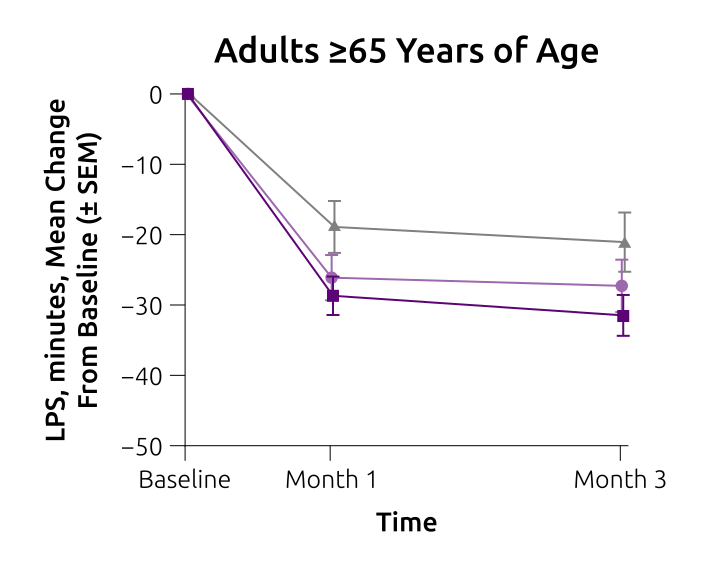
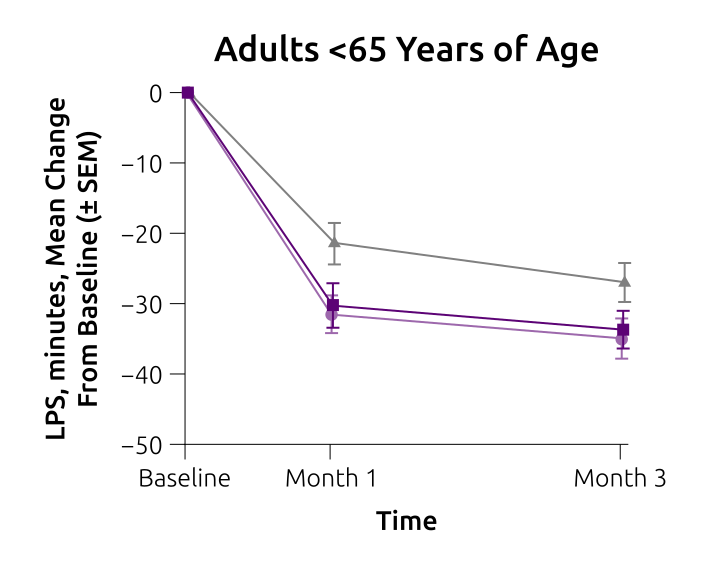
Sleep Induction (LPS)
LPS, latency to persistent sleep; SEM, standard error of the mean.
Adapted from Fietze, I, et al. Drugs Aging. 2022;39:795-810. This article is licensed under a Creative Commons Attribution NonCommercial 4.0 International License: http://creativecommons.org/licenses/by-nc/4.0/.
Self-Reported Total Sleep Time (sTST)
SEM, standard error of the mean.
Adapted from Fietze, I, et al. Drugs Aging. 2022;39:795-810. This article is licensed under a Creative Commons Attribution NonCommercial 4.0 International License: http://creativecommons.org/licenses/by-nc/4.0/.
Sleep Maintenance (WASO)
SEM, standard error of the mean; sTST, self-reported total sleep time; WASO, wake after sleep onset.
Adapted from Fietze, I, et al. Drugs Aging. 2022;39:795-810. This article is licensed under a Creative Commons Attribution NonCommercial 4.0 International License: http://creativecommons.org/licenses/by-nc/4.0/.
Daytime Functioning: IDSIQ Total and Domain Scores
IDSIQ, Insomnia Daytime Symptoms and Impacts Questionnaire.
Adapted from Fietze, I, et al. Drugs Aging. 2022;39:795-810. This article is licensed under a Creative Commons Attribution NonCommercial 4.0 International License: http://creativecommons.org/licenses/by-nc/4.0/.
IDSIQ, Insomnia Daytime Symptoms and Impacts Questionnaire.
Adapted from Fietze, I, et al. Drugs Aging. 2022;39:795-810. This article is licensed under a Creative Commons Attribution NonCommercial 4.0 International License: http://creativecommons.org/licenses/by-nc/4.0/.
IDSIQ, Insomnia Daytime Symptoms and Impacts Questionnaire.
Adapted from Fietze, I, et al. Drugs Aging. 2022;39:795-810. This article is licensed under a Creative Commons Attribution NonCommercial 4.0 International License: http://creativecommons.org/licenses/by-nc/4.0/.
IDSIQ, Insomnia Daytime Symptoms and Impacts Questionnaire.
Adapted from Fietze, I, et al. Drugs Aging. 2022;39:795-810. This article is licensed under a Creative Commons Attribution NonCommercial 4.0 International License: http://creativecommons.org/licenses/by-nc/4.0/.
Visual Analog Scale (VAS)
Adapted from Fietze, I, et al. Drugs Aging. 2022;39:795-810. This article is licensed under a Creative Commons Attribution NonCommercial 4.0 International License: http://creativecommons.org/licenses/by-nc/4.0/.
Insomnia Severity Index (ISI)
Adapted from Fietze, I, et al. Drugs Aging. 2022;39:795-810. This article is licensed under a Creative Commons Attribution NonCommercial 4.0 International License: http://creativecommons.org/licenses/by-nc/4.0/.